Views: 0 Author: Site Editor Publish Time: 2026-06-16 Origin: Site
Improper torque application consistently leads to catastrophic equipment failures. It directly compromises operator safety on the floor. These errors quickly drive up costly warranty claims across various industries. While traditional mechanical wrenches remain industry staples, relying on them introduces significant risks. High-volume environments expose the limitations of manual tools. Operator fatigue sets in rapidly during long shifts. This physical strain naturally creates subjective errors during critical assembly phases.
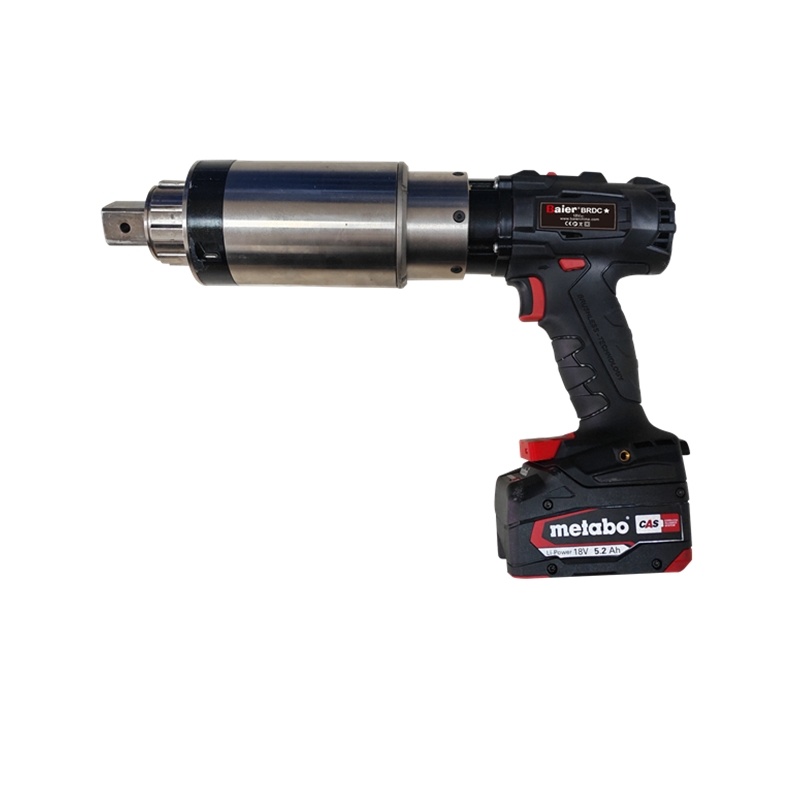
Modern assembly standards now push operations toward smarter motorized solutions. Maintenance teams require objective precision rather than physical estimation. This guide covers fundamental usage rules for all torque tools. It explains exactly how technique dictates accuracy during fastening tasks. You will also learn an objective framework for tool evaluation. We will explore when it makes financial and operational sense to transition to an Electric Torque Wrench.
Operator Technique Dictates Accuracy: Mechanical torque wrenches require strict adherence to grip, speed, and storage protocols; deviating by even an inch alters the applied torque.
Electric Upgrades Mitigate Human Error: Transitioning to an electric torque wrench replaces subjective physical pulls with programmable, repeatable motor control.
Compliance Requires Data: High-liability environments increasingly demand digital data logging, a feature inherently supported by smart electric models but impossible with traditional click wrenches.
Torque errors directly impact business operations and profitability. Over-tightening causes severe thread galling. It strips threads and shears bolt heads entirely. Under-tightening introduces joint relaxation. Fasteners eventually back out due to constant ambient vibration. Both scenarios inevitably result in unplanned downtime and expensive rework.
The fatigue variable plays a massive role in assembly quality. Repetitive manual torqueing rapidly degrades operator accuracy. A technician applying 100 foot-pounds manually will lose precision halfway through a shift. This drop in physical consistency directly impacts yield rates. Quality control suffers when human endurance wanes.
A successful fastening operation relies on specific criteria. Operations managers must target these essential baselines to ensure joint integrity:
Repeatable Accuracy: Fastening systems must hold tolerances typically between ±3% to ±5%.
Verifiable Audit Trails: Every tightened bolt requires a recorded data point for compliance.
Minimal Operator Strain: Tools should absorb torque reactions to protect technicians from injury.
Yanking a mechanical wrench creates unwanted momentum. This sudden force easily overshoots the target torque before the internal mechanism clicks. Operators must pull the handle smoothly. A steady pull ensures the internal spring measures the load accurately.
Best Practice: Take three full seconds to reach your final torque value on mechanical tools. If you use an Electric Torque Wrench, utilize the tool's programmable RPM settings. Motorized gearing ensures a steady, vibration-free rundown every single time.
Precision measurement tools cannot double as demolition equipment. Using a calibrated tool to break loose seized or rusted bolts ruins it. The extreme shock load shatters the internal calibration mechanism.
Common Mistake: Technicians often grab the longest wrench available to loosen a stubborn bolt. Doing this instantly voids manufacturer warranties. Always keep a dedicated breaker bar nearby for disassembly tasks.
Mechanical wrenches undergo calibration based on specific load points. The handle features a distinct knurled groove indicating the exact pivot center. Choking up on the handle skews the applied mathematics. Adding a cheater bar multiplies the force inaccurately and bends the tool shaft.
For high-torque applications, excessive physical leverage becomes highly dangerous. An Electric Torque Wrench paired with a customized reaction arm solves this issue. The arm absorbs the intense physical load against an adjacent nut. This completely removes grip variability and protects the operator's back.
Mechanical click wrenches lose significant accuracy at the extreme low end of their scale. The internal spring lacks the necessary tension to provide reliable readings below 20% capacity.
Always select a tool where your target torque falls neatly in the middle of its capability range. If your target is 50 foot-pounds, avoid using a wrench maxing out at 60 foot-pounds. Choose a 100-foot-pound capacity tool instead.
Leaving a click-style wrench under tension destroys its accuracy. The internal spring remains compressed inside the steel tube. This continuous compression degrades the spring tension rate over time. It guarantees inaccurate readings on your very next job.
Best Practice: Always dial the scale back to the lowest marked setting before returning the tool to its case. Do not drop it below the lowest mark, as this unseats the spring. Smart digital models do not suffer from mechanical spring fatigue. They drastically simplify end-of-shift tool management.
Torque tools drift out of specification through regular use. Industry standards mandate strict calibration schedules. You must calibrate your tools every 5,000 cycles or every 12 months, whichever comes first.
Dropping the tool onto a concrete floor automatically voids its current certification. A dropped tool mandates immediate recalibration before returning to the production line. Treat these devices like fragile laboratory instruments.
Hearing a mechanical "click" does not prove joint security to a quality auditor. It simply indicates the tool reached a threshold. Implement a physical marking system to track completed fasteners visually.
High-liability environments require superior traceability. Smart tools automatically record peak torque data upon completion. They push this information directly to a central database. This creates a permanent, searchable record for every assembled product.
Mechanical tools remain essential for specific use cases. They excel in low-volume repair environments. Budget-constrained independent shops rely on them daily. They operate perfectly in remote environments lacking consistent power access.
However, they carry severe limitations for scaling operations. They induce high operator fatigue during repetitive tasks. They offer zero digital data traceability. Their accuracy remains highly vulnerable to user error and poor technique.
Motorized solutions transform assembly capabilities. Programmable torque and angle settings guarantee ±3% accuracy. This precision remains identical regardless of the operator's physical strength. They scale effortlessly across demanding environments.
Electric systems execute continuous rundowns in high-volume production lines. They operate without the massive overheating issues common to basic pneumatic impact tools. Built-in Bluetooth and Wi-Fi logging automatically secures ISO compliance. This digital footprint protects companies against future liability claims.
Feature Matrix | Mechanical Wrench | Electric Torque Wrench |
|---|---|---|
Accuracy | ±4% to ±6% (highly user-dependent) | ±3% (programmable and consistent) |
Data Logging | None (manual recording only) | Automatic (Bluetooth/Wi-Fi to ERP) |
Operator Fatigue | High (requires full physical force) | Low (motor and reaction arm absorb load) |
Production Speed | Slow (requires manual resetting) | Fast (continuous automated rundown) |
Transitioning to electric models introduces specific training bottlenecks. Managers must allocate time to train operators on new software interfaces. Technicians must learn how to configure digital limit setups correctly. Furthermore, they need hands-on training regarding reaction arms. Improper reaction arm placement causes severe pinch-point injuries.
Cordless electric models introduce new battery management protocols. Operations must actively monitor battery lifecycles across shifts. Facilities must account for the physical footprint of multiple charging stations. Having adequate spare batteries ready ensures continuous line movement without power-related delays.
A widespread calibration assumption often misleads maintenance teams. Many believe electric tools never require calibration. While they lack internal mechanical springs, they rely on complex electronic transducers. These internal sensors still require annual verification. Certified laboratories must validate their accuracy against recognized standards.
Upfront capital expenditure remains a significant hurdle for adoption. Procurement teams must carefully assess the expected ROI timeline. Calculate the precise labor hours saved per shift. Factor in the measurable reduction in costly rework. These operational savings usually justify the initial procurement cost quickly.
Begin by tracking your recent warranty claims. Analyze your historical rework rates on the assembly line. Determine if manual user error represents the root cause of these failures. Identifying specific bottleneck stations clarifies exactly where you need motorized intervention.
Map out your required torque ranges across all product lines. Note any severe space constraints around the fasteners. Ensure sufficient clearance exists for a motorized tool head and its corresponding reaction arm. Calculate your total fastening volume per shift to determine battery requirements.
Review your regulatory environment carefully. Determine if your specific industry legally mandates digital torque auditing. Sectors like aerospace, wind energy, and heavy automotive enforce strict compliance rules. Without digital tracking, you risk losing vital manufacturing contracts.
Shortlist two or three reputable manufacturers. Demand a comprehensive on-site demonstration. Use this opportunity to test tool ergonomics under actual working conditions. Verify software integration capabilities directly against your existing ERP or QMS systems.
Test the tool weight and balance in the hands of your daily operators.
Run a batch of fifty fasteners to monitor battery drain and motor heat.
Export a sample data log to verify system compatibility.
Proper physical technique remains absolutely non-negotiable when operating mechanical tools. However, human capability naturally possesses a rigid ceiling. Fatigue inevitably compromises even the most skilled technician over a long shift. Ignoring these limitations invites inconsistent quality and potential safety hazards.
When production volume accelerates, manual tools struggle to keep pace. Operator safety and precise audit traceability represent critical business priorities today. Upgrading your systems transitions your entire process away from subjective physical labor. You achieve objective, engineered precision. Taking these steps secures your product quality and drastically reduces long-term operational headaches.
A: Yes, specifically for precision assembly tasks. Impact wrenches rely on violent concussive blows. They cannot accurately measure applied torque. An Electric Torque Wrench uses continuous precision gearing. This allows it to hit exact, verifiable specifications without damaging the joint.
A: Despite their digital architecture, they still require regular validation. Standard compliance frameworks like ISO 6789 recommend calibration every 12 months. Alternatively, follow the manufacturer's specific cycle count threshold. Regular verification ensures the internal electronic transducer remains perfectly accurate.
A: Yes, they deliver identical accuracy. Modern cordless models utilize advanced brushless motors paired with smart internal sensors. These sensors monitor available power dynamically. The tool automatically shuts off if the battery voltage drops too low, preventing any inaccurate torque application.