Views: 0 Author: Site Editor Publish Time: 2026-06-20 Origin: Site
High-pressure industrial environments leave zero margin for error in joint integrity. Improper torque frequently leads to catastrophic leaks, equipment failure, or severe safety incidents. You simply cannot rely on guesswork when securing critical infrastructure. At the procurement stage, selecting a reliable tool requires moving past basic spec-sheet marketing. You must evaluate structural durability, spatial constraints, and verifiable accuracy directly. Equipment failures cause devastating operational downtime and massive safety risks. This guide provides a vendor-neutral, engineering-focused framework. We will help you evaluate, shortlist, and implement the right bolting tools for your specific operational tolerances. You will learn how to navigate complex clearance restrictions and verify critical performance claims. Careful planning ensures successful execution during demanding maintenance turnarounds.
The choice between square drive and low-profile hydraulic torque wrenches is dictated strictly by radial clearance and application versatility.
Advertised ±3% accuracy is only achievable through strict, documented calibration and proper hydraulic pump pairing.
Total cost of ownership extends beyond the tool head—evaluating hose swivel ergonomics, material alloys, and pump compatibility is critical for long-term ROI.
Procurement should require traceable calibration certificates and verifiable field-testing data prior to vendor selection.
Engineers rely on standardized guidelines to establish baseline joint integrity. Frameworks like ASME PCC-1 define acceptable variance limits for bolt load. Attaining uniform compression prevents localized gasket failure. Precision tensioning limits bolt scatter across complex flange faces. If you apply uneven load, high-pressure systems fail rapidly. Industrial bolting demands absolute precision to maintain safe operational states. Accurate tools ensure you achieve the exact required yield strength. They prevent accidental over-torquing which physically stretches and destroys vital fasteners. We strictly adhere to these engineering tolerances to guarantee long-term infrastructure safety.
Spatial limitations dictate tool selection more often than raw power requirements. Many applications sit inside incredibly confined geometric spaces. Continuous duty cycles push internal ratcheting mechanisms to their absolute limits. Extreme environments introduce rust, heavy grit, and rapid temperature fluctuations. You must evaluate how these external factors restrict operator access. Offshore rigs and buried pipeline trenches offer minimal working clearance. We advise assessing these physical barriers before authorizing any equipment acquisition. Tools operating in highly corrosive areas require superior protective surface coatings. We frequently see basic tools fail when exposed to harsh industrial elements.
Inaccurate torque yield creates enormous safety and operational hazards. Rework destroys project timelines and delays critical facility commissioning phases. Environmental leaks trigger immediate, severe compliance penalties from regulatory bodies. We view industrial-grade tooling as an essential risk mitigation strategy. A single blown flange easily shuts down an entire processing facility. Unexpected downtime costs vastly outweigh the initial investment in premium tooling. Protecting your personnel from high-pressure blowouts remains the highest priority. Investing in verified equipment secures your operational timeline and reputation.
We categorize bolting tools based on their physical configuration. Each design serves highly distinct structural and operational functions. Understanding these differences prevents costly deployment errors in the field.
These robust tools handle general-purpose industrial applications brilliantly. We specify them regularly where physical clearance is not strictly limited. They offer immense versatility through interchangeable standard impact sockets. You can utilize one drive body across dozens of socket sizes. This interchangeability makes them highly practical for multi-size operational maintenance. However, they naturally carry a taller, heavier profile. The geometry requires sufficient overhead and radial space to function safely. They cannot access nuts positioned tightly against equipment walls or nested deep within structural beams.
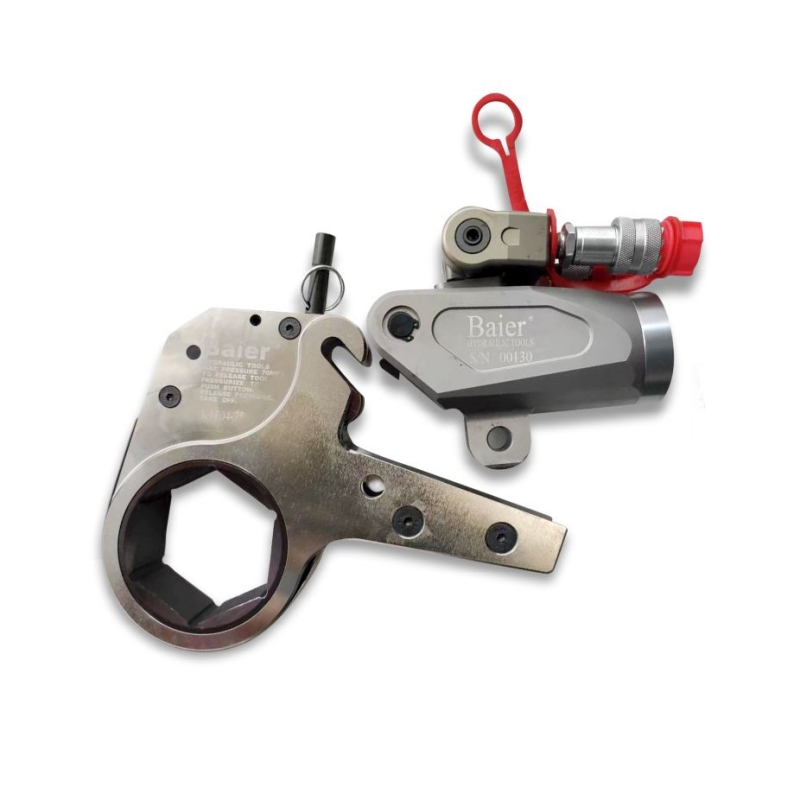
These specialized units dominate in tight, severely restricted clearances. We deploy them on pipeline flanges, Blowout Preventers (BOPs), and compact machinery. An intelligent in-line reaction pad completely prevents dangerous side-loading forces. The interchangeable hex cassettes fit seamlessly and directly over the nut. This slim design solves the most frustrating spatial access problems. A robust hydraulic torque wrench utilizing hex cassettes eliminates major operational headaches. The main limitation centers entirely on cassette specificity. You require multiple size-specific cassettes for varying nut dimensions. We map out all fastener sizes before purchasing low-profile cassettes.
Tool Configuration | Ideal Environments | Key Strengths | Primary Limitations |
|---|---|---|---|
Square Drive | Open flanges, structural steel, heavy machinery | High versatility, single tool handles multiple sockets | Requires significant overhead and radial clearance |
Low-Profile (Hex) | Pipelines, BOPs, confined geometric spaces | Prevents side-loading, extremely slim profile | Requires separate specific cassettes for each nut size |
Base metallurgy severely impacts long-term tool survival and operator endurance. Evaluate units forged from aircraft-grade aluminum or proprietary steel alloys. Heavier profiles dramatically increase operator fatigue over long maintenance shifts. Muscular fatigue elevates drop risks during high-angle or prolonged scaffolding applications. We prioritize lightweight, high-yield alloys to maximize crew handling safety. Exceptional torque-to-weight ratios keep teams productive and significantly reduce site injuries. Better materials resist internal galling under extreme pressure cycles. You want tools capable of surviving rigorous industrial abuse without adding unnecessary weight.
Advertised accuracy means absolutely nothing without rigorous, standardized proof. Assess the internal mechanical geometry responsible for achieving ±3% accuracy. Demand ISO 17025 traceable calibration certificates for every individual unit. We strongly advise remaining skeptical of undocumented, vague accuracy claims. A reliable hydraulic torque wrench demands strict calibration discipline. Regular laboratory testing ensures the internal cylinder maintains reliable force output. Recalibration protects you from insidious torque drift over time. You cannot guarantee joint integrity using uncalibrated equipment.
High-pressure operations frequently bind poorly engineered tools onto the fastener. Look specifically for multi-axis hose swivels, such as 360° x 180° designs. These rotating joints prevent dangerous hose binding during complex positional setups. Require built-in anti-jam release levers on any tool you consider. These mechanical levers prevent the drive from locking up post-torque. Tool lock-up remains a notoriously common cause of frustrating operational delays. You lose hours hammering stuck tools off heavy industrial flanges. Modern anti-jam features eliminate this costly downtime entirely.
The reaction arm absorbs incredibly massive torsional forces during operation. Analyze the physical durability and adjustability of this vital structural component. Poorly designed attachment splines shear catastrophically under continuous maximum-capacity loads. We look for multi-position reaction arms to adapt to unusual equipment geometries. A robust reaction point protects both the operator and the surrounding infrastructure. If the reaction arm slips, the tool spins violently out of control. We demand precision-machined splines to lock the arm securely in place.
Your wrench remains only as reliable as its power source. You must match fluid flow rates and pressure capacities perfectly. Most bolting systems utilize standard 10,000 PSI pump configurations safely. We evaluate continuous duty cycle ratings very carefully before deployment. You must decide logically between air/pneumatic pumps and electric power units. Mismatched pumps cause sluggish operation and highly inaccurate torque delivery. Low flow rates extend bolting times and frustrate maintenance crews. We ensure pump reservoirs hold sufficient oil to prevent overheating.
High-pressure fluid lines introduce severe practical risks into any workspace. We enforce strict requirements for burst-resistant, multi-layer safety hoses. You must secure designated tethering points for drop-safe compliance. Extreme wind and offshore applications demand robust secondary retention systems. Proper hose routing prevents deadly tripping hazards and catastrophic line ruptures. Pressurized hydraulic injection injuries pose life-threatening risks to field personnel. We inspect hoses daily for abrasions, deep cuts, or compromised fittings. Secure quick-disconnect couplers prevent accidental fluid discharge during active operations.
High-end industrial tools strictly require competent, highly focused operators. We outline the necessary training for calculating complex pressure-to-torque conversions. Operators must learn safe reaction-point positioning to avoid devastating pinch injuries. Comprehensive training ensures personnel recognize subtle signs of equipment fatigue early. Competent crews maximize efficiency while strictly minimizing site safety risks. We conduct regular hands-on workshops to verify field readiness. Untrained personnel easily destroy expensive equipment through improper setup procedures.
Never guess your operational parameters from behind a desk. Map out absolute minimum clearances around complex structural flange arrangements. Document the maximum required torque values across all major assemblies. We recommend leaving a 20-30% buffer capacity for stubborn, rusted bolts. Identify your available field power sources accurately before equipment arrives. Knowing if you have stable electric or reliable air supply is vital.
Excellent tools fail quickly without strong, responsive backend logistics. Prioritize manufacturers offering localized, fast-turnaround regional calibration services. You need partners possessing readily available, fully certified loaner tools. Immediate spare parts inventory keeps your critical projects moving forward. We avoid vendors lacking dedicated regional technical support or rapid repair capabilities.
Never finalize major decisions based solely on a glossy catalog. Require an intense on-site demonstration on your most difficult application. Verify physical clearance, handle ergonomics, and actual field pump performance. Real-world testing exposes flaws hidden cleverly within marketing literature. We rely on systematic field trials to confirm ultimate suitability.
Map out exact spatial constraints around complex structural flanges.
Document all required torque capacities and add a 20% safety buffer.
Verify available on-site power sources for optimal pump selection.
Request detailed ISO 17025 calibration certificates from all prospective vendors.
Schedule rigorous on-site demonstrations targeting difficult fastener locations.
The best bolting solution aligns perfectly with your physical constraints. Accuracy requirements and field maintenance capabilities heavily influence final selection. Protect your site safety by verifying all independent calibration certificates. Choose your pump configuration based strictly on actual field power availability. Proper implementation prevents catastrophic failures and ensures long-term operational success. We urge you to download a comprehensive technical spec checklist today. Request a thorough joint-integrity consultation from certified bolting engineers. Contact technical support for a detailed, site-specific tool evaluation.
A: Typically every 12 months or after heavy use and repair. Industry standards like ISO 9001 strongly recommend annual verification. However, high-frequency operations may require bi-annual checks. Strict adherence to this schedule guarantees reliable bolt loads.
A: No. While the pressure matches, critical variables differ. Coupler types, fluid flow rates, and pressure relief valve behaviors vary significantly between models. Mismatched systems risk severe tool damage. They also produce highly inaccurate torque output during operation.
A: Pneumatic tools use compressed air for fast, continuous rotation. They are generally faster but carry a larger physical footprint. Hydraulic wrenches operate via high-pressure fluid in precise ratcheting cycles. This fluid-driven method offers much higher torque capacity in significantly tighter clearances.