Views: 0 Author: Site Editor Publish Time: 2026-06-03 Origin: Site
Fastening compliance forms the absolute backbone of mechanical integrity across all modern industries. Under-torquing leads to dangerous vibration back-off. This physical phenomenon allows critical joints to loosen gradually over time. Conversely, over-torquing causes immediate thread yielding. This inevitably results in catastrophic fastener failure under heavy load. Engineers constantly rely on the 20% rule to maintain strict quality control. This foundational principle originates directly from mechanical spring limitations. It also aligns strictly with standardized testing parameters used worldwide.
We wrote this comprehensive guide to demystify the 20% rule entirely. You will learn to separate proven engineering facts from common shop-floor myths clearly. We provide a practical decision framework for evaluating your daily tooling needs. You will discover exactly when traditional click-type wrenches suffice. Furthermore, we outline when upgrading to a modern Electric Torque Wrench becomes required for operator safety, process compliance, and operational scale.
The Rule Defined: A torque wrench is generally only certified to deliver its stated accuracy (usually ±4%) within 20% to 100% of its total scale.
The Engineering Reality: Operating below the 20% threshold exponentially increases the margin of error due to the non-linear behavior of mechanical coil springs at low tension.
Compliance Standards: ISO 6789 and ASME standards dictate that calibration and certification testing occur at 20%, 60%, and 100% of full scale.
Modern Tooling Solutions: Upgrading to an electric torque wrench relies on strain gauges rather than springs, offering a flatter accuracy curve, data logging, and reduced risk of operator error in critical applications.
The 20% rule establishes a hard operational boundary for technicians. You should never use a mechanical wrench to apply force below 20% of its maximum rated capacity. For example, if you own a 100 ft-lb tool, you cannot safely use it for a 15 ft-lb application. You must switch to a smaller, more appropriate tool to guarantee joint integrity.
Mechanical click-type wrenches rely entirely on internal coil springs. These internal springs dictate the precise moment of tension release. All mechanical springs require a solid baseline preload to function accurately. At the absolute bottom of the scale, this necessary preload barely exists. Below the 20% threshold, the physical feedback becomes muddy and highly inconsistent. The internal linkage struggles to actuate the recognizable "click" mechanism cleanly. Friction inside the steel tube overcomes the weak spring tension. This friction creates wild variations in the actual applied force.
Many technicians actively debate this rule on industry forums. They frequently ask if accuracy suddenly falls off a cliff exactly at 19%. Engineering reality tells us a slightly different story. It is not a magical or hard physical cliff. Instead, it represents a standard tolerance breach. A mechanical wrench rated for ±4% accuracy at 20% behaves unpredictably lower down. It might deviate by ±10% or even ±15% at 10% capacity. You cannot trust this massive margin of error. It will inevitably fail quality control audits. Worse, it leaves your final assembled product vulnerable to failure. We must respect the physics of coiled steel. It requires adequate tension to deliver repeatable, safe results.
Global industry bodies leave absolutely no room for guesswork. Standardized protocols like ISO 6789 and ASME B107.300 establish strict calibration rules. Official testing laboratories only certify tools at specific scale intervals. They meticulously test manual tools at 20%, 60%, and 100% of their full scale. Laboratories conduct these tests under strictly controlled ambient temperatures to prevent metal expansion from skewing the data. They ignore the bottom segment entirely. Anything below 20% remains mathematically uncertified by official bodies. You operate completely blind when using a tool outside these certified brackets.
Out-of-spec torquing creates massive operational liabilities for any facility. When you fasten outside certified ranges, you invite disaster. We routinely see poor fastening lead to expensive production rework. It triggers costly warranty claims from unhappy end-users. Loose fasteners also create severe safety hazards in heavy machinery and passenger vehicles. An improperly tightened lug nut can cause catastrophic wheel detachment. You bear the total liability when your tools lack certified accuracy.
Experts recommend using mechanical tools within their designated "sweet spot" for optimal results. You achieve the best mechanical longevity and repeated accuracy between 40% and 80% of the total capacity. Working in this middle zone keeps the internal spring well-tensioned but not overstressed. You should strictly reserve the extreme upper and lower limits for rare edge cases. By planning your tool inventory around this sweet spot, you minimize wear. You also maximize the valuable time between mandatory laboratory recalibrations.
Traditional click-type tools carry several distinct operational limitations. They remain highly susceptible to variations in operator technique. The physical speed of the operator's pull changes the final applied force. A rapid jerk applies far more dynamic force than a slow, steady sweep. The operator's pulling angle also impacts the final tension reading significantly. Furthermore, internal mechanical parts experience steady metal fatigue over time. You must strictly adhere to the 20% floor to avoid a fastening disaster.
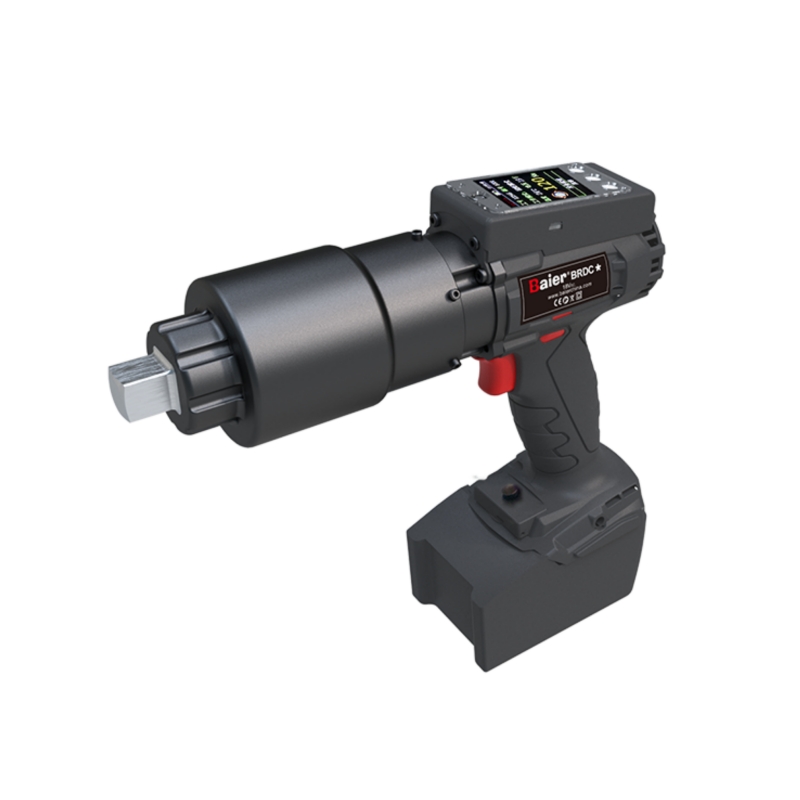
Upgrading your equipment significantly changes this operational paradigm. Implementing a reliable Electric Torque Wrench removes spring-based variables completely. These advanced units rely on solid-state electronics rather than moving metal parts.
Here are the core technological shifts defining modern fastening:
Sensor Technology Over Springs: Digital tools use electronic strain gauges rather than mechanical springs. They measure micro-deformations in the metal drive. This allows them to maintain tighter tolerances across a much wider usable range.
Unmatched Data Traceability: Digital outputs simplify enterprise quality assurance. The tool continuously logs every fastening cycle. It exports this exact data for comprehensive QA audits and defect tracing.
Continuous Active Accuracy: The system completely eliminates the inconsistent mechanical "click". It visually and audibly guides you to exact specifications. Lights change progressively from green to red as you reach the target tension.
Let us compare the two approaches directly to clarify their operational differences.
Feature Comparison | Mechanical Click-Type | Digital / Electronic Technology |
|---|---|---|
Primary Internal Mechanism | Physical coiled steel spring | Electronic strain gauge bridge |
Certified Usable Range | Strictly 20% to 100% of max scale | Often certified from 10% to 100% |
Data Logging Capabilities | None available | Full digital cycle recording |
Operator Technique Dependency | High (Pull speed affects final torque) | Low (Visual/audio indicators guide you) |
Physical Feedback | Tactile mechanical breakaway click | Haptic vibration, LEDs, and buzzers |
Deciding exactly when to switch technologies depends heavily on application criticality. You can safely use mechanical tools for basic structural rough-in tasks. They also work perfectly well for non-critical facility maintenance. If a bolt holding a simple bracket loosens slightly, no immediate danger occurs.
However, high-stakes environments demand a much greater level of precision. You should absolutely specify an Electric Torque Wrench for aerospace component manufacturing. Automotive engine assembly requires exact tolerances to prevent critical fluid leaks. High-vibration heavy machinery also requires this undeniable level of certainty. In wind turbine construction, for example, you cannot afford a single loose bolt.
You must carefully evaluate process scalability and overall cycle times. Manual recalibration steals valuable production hours from your maintenance team. Operators lose massive amounts of time constantly switching between differently sized mechanical wrenches. Digital options consolidate your toolings effectively. A single electronic unit safely covers a broader, highly reliable range. It allows you to program specific digital presets for different joints seamlessly.
Follow these sequential steps to evaluate your potential upgrade path:
Audit your current fastening range requirements across the entire assembly line.
Identify specific applications where a joint failure poses significant safety risks.
Calculate the actual time your team spends switching between various mechanical capacities.
Determine if your internal quality assurance protocols require documented digital torque logs.
Evaluate your environmental conditions, ensuring digital screens remain visible during field operations.
Proper tool lifecycle management determines your long-term assembly success. The mechanical world strictly follows another crucial 20% rule concerning storage. You must dial mechanical wrenches down to their lowest marked setting before placing them in a drawer. This setting is almost always 20% of the maximum capacity. Leaving them fully tensioned causes permanent spring memory. This metal deformation completely skews your calibration accuracy. Interestingly, electronic tools safely bypass this specific physical vulnerability. They lack the tensioned springs that warp over time.
You need a highly intelligent strategy for calibration frequency. We strongly recommend scheduling maintenance intervals based on actual usage. Sending a tool out every 5,000 operational cycles makes more sense than waiting exactly 12 months. An unused tool sitting in a protective case might not need calibration. Conversely, a heavily used tool on a three-shift production line might need it much sooner. Tracking these cycles manually proves difficult. This operational reality pushes many facilities toward tools featuring digital cycle counters.
Operator rollout comes with distinct and predictable learning curves. Transitioning seasoned technicians from tactile clicks to electronic haptics requires deliberate training.
We frequently observe these common mistakes during the transition:
Ignoring the visual LED light indicators entirely.
Pulling the handle much too fast out of ingrained mechanical habit.
Failing to verify the digital screen preset before applying heavy force.
Pushing past the warning buzzer because they expect a physical breakaway sensation.
You must monitor early usage closely. Deliberate coaching prevents accidental over-torquing during this critical adoption phase.
The 20% rule remains an uncompromising physical law governing all mechanical tools. It serves as a strict compliance standard for all official laboratory testing worldwide.
Traditional wrenches require extremely careful range management to stay within certified tolerances. You must monitor their usage heavily to avoid severe quality breaches on the assembly line.
Adopting an Electric Torque Wrench provides a vastly more robust and operator-friendly solution. It secures high-stakes assembly processes beautifully through active, real-time guidance.
We urge you to audit your current fastening ranges against existing tool capacities today. Consider actively upgrading your primary tooling lineup for all critical-path applications.
A: Yes, the tool will physically turn the fastener. However, the accuracy remains entirely unverified by industry standards. You risk severe non-compliance and extreme margins of error. We strongly advise against applying any fastening force below the certified 20% threshold.
A: Dialing the tool completely to zero removes all internal spring tension. This dangerous practice allows internal mechanical components to shift or dislodge entirely. Returning it to the lowest marked setting keeps the minimal necessary tension intact. This preserves the internal assembly correctly.
A: Digital strain gauges remain highly accurate across much broader operational spectrums. Still, reputable manufacturers dictate a certified floor to guarantee the stated accuracy. This certified floor often sits at 10% or 20% depending on the brand. Always consult the official certificate.
A: Look closely for inconsistent clicking behavior or muddy tactile feedback during use. Visible wear on the ratcheting head also signals deep mechanical trouble. The best verification method involves testing the tool on a digital calibration stand immediately.