Views: 0 Author: Site Editor Publish Time: 2026-06-08 Origin: Site
Mechanics and technicians face a constant battle between traditional reliability and modern digital precision. High-stakes fastening applications leave zero room for error. Modern materials like delicate carbon fiber and lightweight aluminum alloys require exact clamping force. Choosing the right tool impacts everything from daily workflow efficiency to final product safety. This critical choice goes far beyond simple mechanical accuracy. It hinges heavily on your daily work environment. Strict compliance guidelines and specific operational constraints also dictate your tooling needs. A rugged off-road garage demands fundamentally different equipment than a sterile aerospace laboratory.
We designed this guide to provide a practical evaluation framework. You will learn how to match tool capabilities directly to your specific shop realities. We will explore the proven strengths of mechanical systems alongside the advanced capabilities of modern digital tools. By the end, you can confidently choose the ideal instrument for your team. You will understand exactly which technology serves your specific workflow best.
Click Torque Wrenches offer unmatched durability, tactile feedback in noisy environments, but lack data traceability.
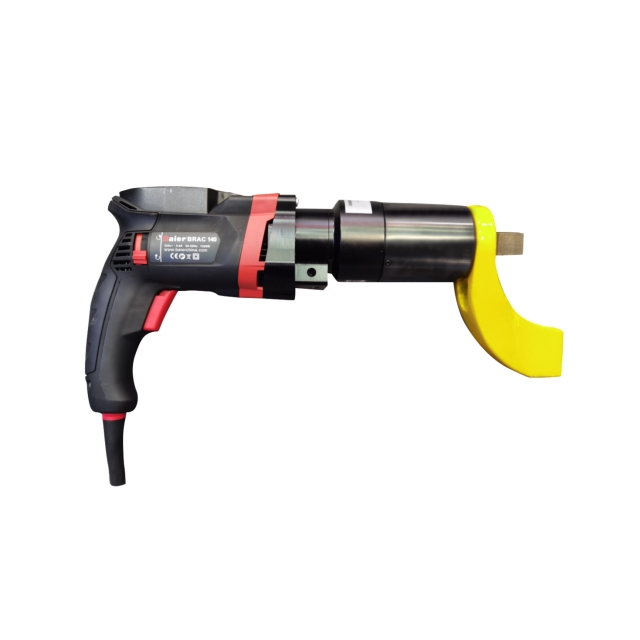
An Electric Torque Wrench provides superior accuracy, Torque-plus-Angle capabilities, and critical data logging for quality assurance and compliance.
The primary implementation risk for electric models is fragility (sensor damage from drops) and battery reliance, whereas click models suffer from calibration drift if not properly stored at their lowest setting.
Shortlist logic: Choose click for general automotive, heavy equipment, and harsh environments; invest in electric for engine building, aerospace, and ISO-compliant manufacturing.
You must fundamentally understand the physics of clamping force before selecting a precision instrument. Bolts act exactly like rigid metal springs. You stretch them deliberately to create tension holding two components together. Under-torquing fails to stretch the bolt sufficiently. Fasteners eventually back out under heavy vibration. This causes catastrophic part separation on the highway or factory floor. Over-torquing creates equally dangerous scenarios. Technicians stretch bolts past their natural yield point. They cause stripped internal threads and permanently warp delicate engine components. The tool you choose directly prevents these failures.
You must evaluate your primary workflow environment using these specific criteria:
Operational Environment Rating: Assess the daily exposure to heavy grease, metal dust, and hard impacts.
Precision Tolerance Threshold: Determine if your specific assemblies require exact rotational angle measurements.
Regulatory Documentation: Verify if your specific industry demands logged fastening data for mandatory safety audits.
Contrast two completely different workspaces. Imagine a pristine engine-building room. Technicians assemble delicate aluminum cylinder heads. This clean space highly favors digital precision. Now picture a noisy diesel maintenance bay. Mechanics work on heavy steel suspensions under commercial trucks. This harsh setting heavily favors mechanical resilience. Some manufacturing sectors mandate digital audit trails. They strictly require an Electric Torque Wrench for quality control compliance. General repair shops rarely need this logging capability. They only require reliable functional baseline accuracy.
Mechanical tools rely on a proven spring-and-pawl mechanism. You twist the knurled handle to compress a heavy internal spring. This action sets your desired tension limit. Once you reach the target tension during tightening, the internal pawl slips out of place. It creates a distinct mechanical click. You instantly feel and hear this physical release in your hands.
This tactile feedback proves incredibly crucial during actual shop work. Technicians often work blind under heavy machinery. They operate in deafeningly loud environments. Impact wrenches blare constantly in the background while air compressors run continuously. A physical snap in the handle cuts through all that ambient noise effortlessly. Technicians cannot safely look away to read a digital screen while balancing under a chassis.
Mechanical tools require absolutely no batteries. They remain constantly ready for immediate field deployments. Rugged metal bodies survive moderate drops easily. Similar physical impacts would instantly destroy delicate digital screens. However, these mechanical workhorses carry known functional constraints. Operators find them slower to adjust between extreme high and low settings. They generally offer a ±4% accuracy margin, which falls short for hyper-precision tasks.
Best Practice: Always wind the dial back to the lowest marked setting immediately after finishing a job. This relieves internal spring tension and preserves calibration memory.
Best Practice: Store the instrument in a dedicated hard case to prevent accidental impacts against steel workbenches.
Common Mistake: Technicians often continue pulling after feeling the initial click. This adds excess momentum and applies dangerous accidental over-torque to the fastener.
Modern engineering often demands absolute perfection. Manufacturers integrate sophisticated internal strain gauges to meet these demands. They embed powerful microprocessors directly inside these precision instruments. The internal sensor measures minute physical deflections in the solid metal shaft. It translates this microscopic physical strain into highly accurate digital values. You get incredible high-fidelity accuracy. These digital instruments often reach ±2% or better precision.
Many modern automotive and industrial applications utilize torque-to-yield fasteners. These specialized bolts require an initial tightening sequence to a specific tension. They then demand a precise degree of additional rotation. An Electric Torque Wrench handles this complex process seamlessly. It provides built-in gyroscopic angle measurement capabilities. You no longer need to attach a clumsy separate plastic angle gauge to your socket.
Data logging represents a massive advantage for complex manufacturing operations. Quality control supervisors can download thousands of fastening cycles directly to a computer system. This ensures perfect ISO quality compliance. Operators receive progressive alerts during use to prevent over-tightening. Bright LED lights illuminate sequentially as tension increases. Digital screens display real-time tension numbers clearly. The handle vibrates forcefully exactly as you approach the final target.
Best Practice: Inspect the battery compartment regularly to ensure terminals remain free of acid corrosion.
Best Practice: Recalibrate the digital strain gauge immediately after any significant drop onto a hard surface.
Common Mistake: Rushing the tightening sequence. Digital sensors require a smooth, steady pull to register accurate real-time readings.
Let us evaluate these distinct tools across vital operational dimensions. Real-world applications vary wildly from shop to shop. A standard ±4% accuracy rating handles general automotive suspension work perfectly. A heavy steel control arm easily absorbs minor tension variances. Conversely, fastening a titanium main bearing cap demands much tighter tolerances. Here, the ±2% variance of digital tools prevents disastrous aluminum engine block failures.
Sensory feedback also sharply separates the two distinct styles. Feeling a physical click builds natural mechanical intuition over time. Watching LED lights requires divided visual attention. You cannot always look directly at the tool inside tight engine bays. The workflow speed differs dramatically as well. You simply pick up a mechanical tool, twist the handle, and pull. Digital models require turning the power on, navigating digital menus, setting the target, and confirming the angle mode.
For large-scale industrial manufacturing, digital tools scale effortlessly. They integrate directly into factory software networks. They connect to inventory tracking systems seamlessly. Managers monitor production consistency across the entire floor in real time. Still, we must maintain a highly balanced perspective. Absolute digital precision becomes utterly wasted if the sensitive tool breaks during its very first shift.
Evaluation Criteria | Mechanical Click Wrench | Digital Electric Wrench |
|---|---|---|
Standard Accuracy | ±4% margin of error | ±2% or better precision |
Environmental Durability | Highly resistant to drops and heavy grease | Fragile screens; highly sensitive electronics |
Primary Feedback | Tactile physical click and audible sound | Sequential LED lights, beeps, and handle vibration |
Angle Measurement | Requires separate external angle gauge attachment | Built-in gyroscopic angle tracking |
Power Source Requirement | None (Purely mechanical spring mechanism) | AA batteries or rechargeable lithium packs |
Every professional tool introduces specific operational risks into your shop. We must examine tool longevity and daily maintenance realities closely. Digital tools contain highly sensitive internal electronics. A single severe drop onto a solid concrete floor can easily ruin the internal strain gauge. Repairing this delicate component often requires shipping the instrument back to the original manufacturer. Conversely, mechanical click models survive harsh workshop abuse incredibly well. They often perform reliably for several decades.
Both variations absolutely require strict annual calibration. Industry standards dictate regular laboratory testing. Calibration technicians test the tools on dedicated digital transducers to measure actual output against stated targets. This maintains vital safety certifications. Internal springs lose their memory over time. Solid-state sensors experience electronic drift. You cannot ignore calibration simply because a tool feels correct.
User error presents another significant risk factor. Operators using mechanical models sometimes ignore the physical release. They push straight through the click using their body weight. This causes dangerous accidental over-torquing. Digital tool users face completely different daily challenges. Technicians might misinterpret confusing digital screen readouts in poor lighting. Dead batteries easily halt progress during crucial jobs. Delicate handling requirements significantly slow down fast-paced operations. You cannot rush safely through high-volume tasks using sensitive digital equipment.
Follow this structured evaluation logic to finalize your tooling decision properly.
Buy a mechanical click tool if you work heavily in heavy-duty diesel repair or agricultural equipment maintenance. The tool rotates constantly among multiple technicians in your shop. Shared tools inevitably suffer accidental abuse from hurried workers. Mechanical variants handle this rough treatment beautifully. You operate a high-volume tire shop requiring rapid, repetitive fastening without looking at screens. You are a home garage enthusiast. Digital models sitting unused for many months risk severe internal battery corrosion destroying the circuit board.
Invest in an Electric Torque Wrench if you build high-performance precision engines regularly. Fastening delicate head bolts requires exact torque-plus-angle measurements to prevent gasket failure. You work heavily in aerospace assembly or handle delicate carbon-fiber bicycle frames that crack easily. Your specific regulatory environment legally requires digital torque verification and traceable data logs. Your shop setup allows for dedicated, carefully padded storage specifically meant for precision diagnostic instruments.
The final tooling choice depends entirely on your specific daily application. The digital variant serves beautifully as a highly specialized diagnostic and assembly instrument. It guarantees pristine traceability, handles complex angle measurements, and provides pinpoint accuracy. The mechanical click version remains your highly durable, daily-driver workhorse. It survives the absolute harshest workshop conditions and delivers immediate tactile feedback.
Take dedicated time to review your most common fastening tasks. Audit your daily workflow rigorously before purchasing new equipment. Ask yourself practical questions. Do your typical fasteners strictly require specific rotational angle measurements? Does your shop environment expose precision tools to extreme impact and heavy grease? Match the appropriate instrument to your actual physical reality. This careful selection process ensures highly safe assemblies and highly efficient daily operations for years to come.
A: No, they do not require this step. These digital tools use solid-state internal strain gauges instead of physical tension springs. You simply need to turn the power off after use. We highly recommend removing the batteries for long-term storage to prevent internal acid corrosion.
A: Yes, historically they have successfully built millions of engines. Older engine block designs easily tolerate minor mechanical accuracy variances. However, modern torque-to-yield fasteners change this dynamic entirely. They demand specific rotational angle measurements. The built-in digital angle feature of modern tools makes assembly much safer.
A: The general industry standard requires professional laboratory calibration once a year. High-volume production shops should calibrate tools every 5,000 cycles. You must rigorously follow this schedule regardless of whether you use a mechanical or digital model. Consistent calibration guarantees safety compliance and prevents part failures.